
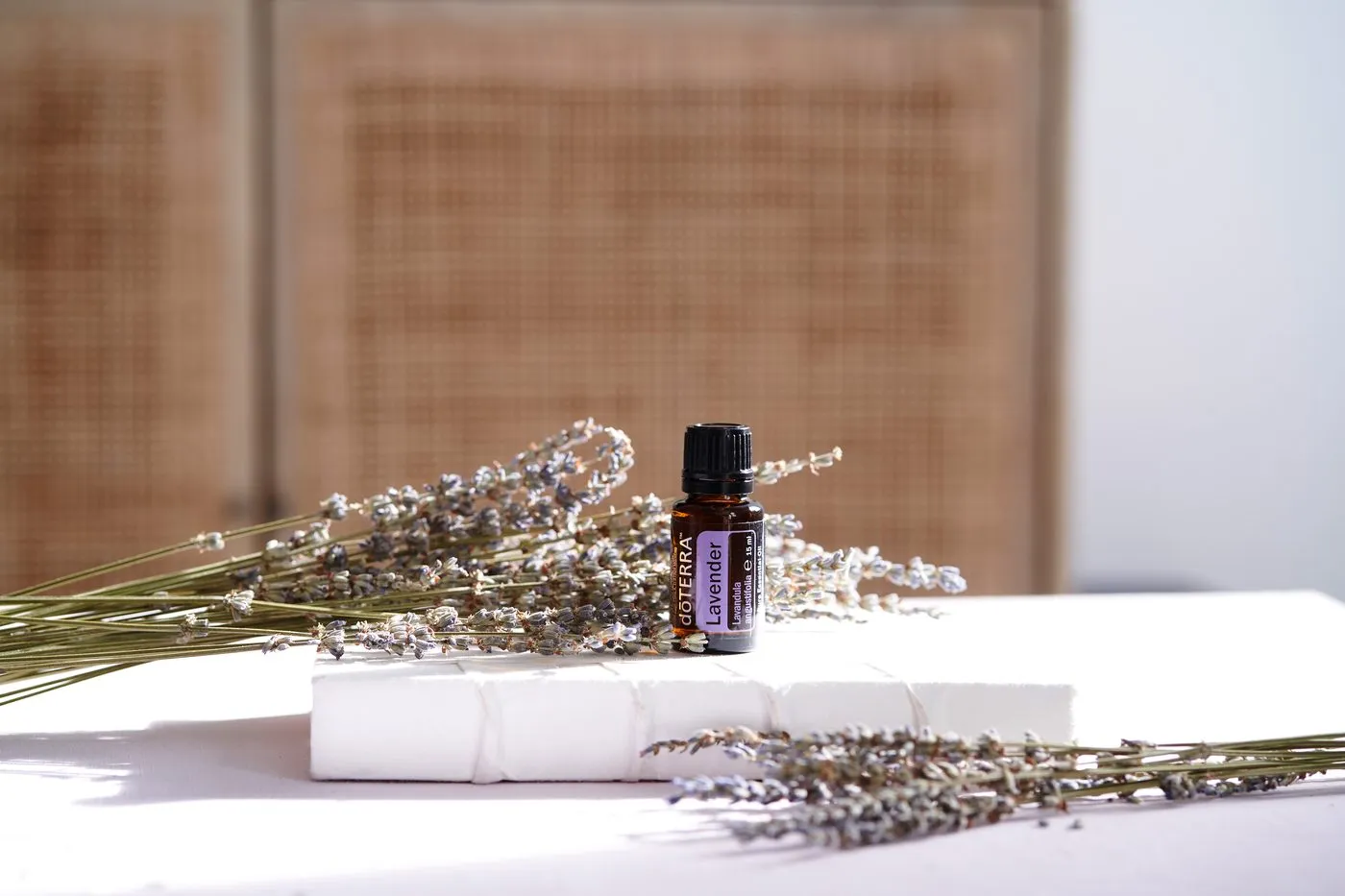
Quick facts
| Feature | Information |
|---|---|
| Botanical name | Lavandula angustifolia |
| Plant part / method | flowers, steam distillation |
| Scent | floral, lightly herbal |
| Main constituents | linalool, linalyl acetate |
| Most common uses | evening diffuser, pillow, bath, diluted on the skin |
| Watch out for | sensitive skin, pets (especially cats), never take by mouth |
What people use it for
Lavender has long been associated with winding down. In practice it shows up most often in an evening ritual: a few drops in a diffuser an hour before bed, one drop on the hem of a pillowcase, or a diluted drop in a body cream or oil. Think of it as an end-of-day scent, not a medicine — research on lavender and sleep is limited and uneven in quality.
How to use it
- Aromatically: 3–5 drops in a room diffuser, ideally for 30–60 minutes.
- On the skin: only diluted in a carrier oil — usually around 1–2% (1–2 drops per 5 ml, about a teaspoon, of carrier oil). Patch-test first on a small area.
- Pillow: a drop on the edge of the pillowcase, not on facial skin.
- By mouth: don't.
Precautions
- Don't apply undiluted oil to large areas of skin.
- If you are pregnant or breastfeeding, have a medical condition, take medication or have allergies, ask your doctor first.
- For children, use only very low dilutions and only after advice — see essential oils and children.
- Cats and dogs can be sensitive to oils: ventilate the room, let the animal leave, and never apply oils to its coat.
- Store tightly closed, cool and away from light, flames and children.
Pairs well with
Wild Orange (a lighter, sweeter note), Frankincense (warmer and resinous) and a little Peppermint if you want to add freshness.