
Why we talk about safety at all
An essential oil is a concentrated plant extract. A single drop can contain as many active compounds as a large amount of the plant itself. That's why “natural” does not mean “harmless”: oils can irritate skin, trigger allergic reactions or harm animals. The good news is that a few simple rules remove most of the risk.
This article is educational. It does not replace a doctor's advice, and we do not claim that oils treat anything.
Three ways to use oils — and the simplest one
- Aromatically (diffuser, a breath from cupped hands): the gentlest way to start. See how to choose a diffuser and a healthy scent at home.
- On the skin, diluted in a carrier oil, lotion or cream.
- By mouth — we don't recommend it. The Tisserand Institute advises against taking essential oils by mouth without a qualified practitioner, and against adding them to water. Even if the label of a specific product in your country allows otherwise, talk to a doctor or pharmacist first.
Dilution: a table you can remember
Assume about 20 drops per ml (a rough convention; bottles differ). Then 1 drop per 5 ml (a teaspoon) of carrier is about 1%.
| Amount of carrier | 1% (gentle, face, sensitive skin) | 2% (typical for the body) |
|---|---|---|
| 5 ml (teaspoon) | 1 drop | 2 drops |
| 10 ml (roll-on) | 2 drops | 4 drops |
| 15 ml | 3 drops | 6 drops |
| 30 ml | 6 drops | 12 drops |
- Start with the lower concentration. More drops doesn't mean “better”, just a higher chance of irritation.
- A carrier can be sweet almond, jojoba, fractionated coconut oil or an unscented lotion. Water does not dilute oils — they separate from it.
- We don't give concentrations for babies and young children here. Their rules are in a separate article: essential oils and children.
The patch test — 24 hours
The first time you use a new oil, put a little of the diluted mix on the inside of your forearm and wait 24 hours. Redness, itching or blisters mean: wipe off with vegetable oil (not water) and don't use that oil again.
Photosensitivity: citrus and sun
Cold-pressed citrus oils (e.g. Lemon, Wild Orange) can increase skin sensitivity to UV light. NAHA advises staying out of the sun and tanning beds for at least 24 hours after putting such an oil on the skin. In a diffuser they pose no such problem.
Who should ask a doctor first
- people who are pregnant or breastfeeding,
- people with chronic conditions (e.g. asthma, epilepsy), on medication, or with a history of strong allergies,
- people before or after surgery,
- parents of babies and young children — some oils, such as Peppermint, are not suitable near a child's face.
This is not a full list of contraindications. When in doubt, a doctor or pharmacist decides.
Pets at home
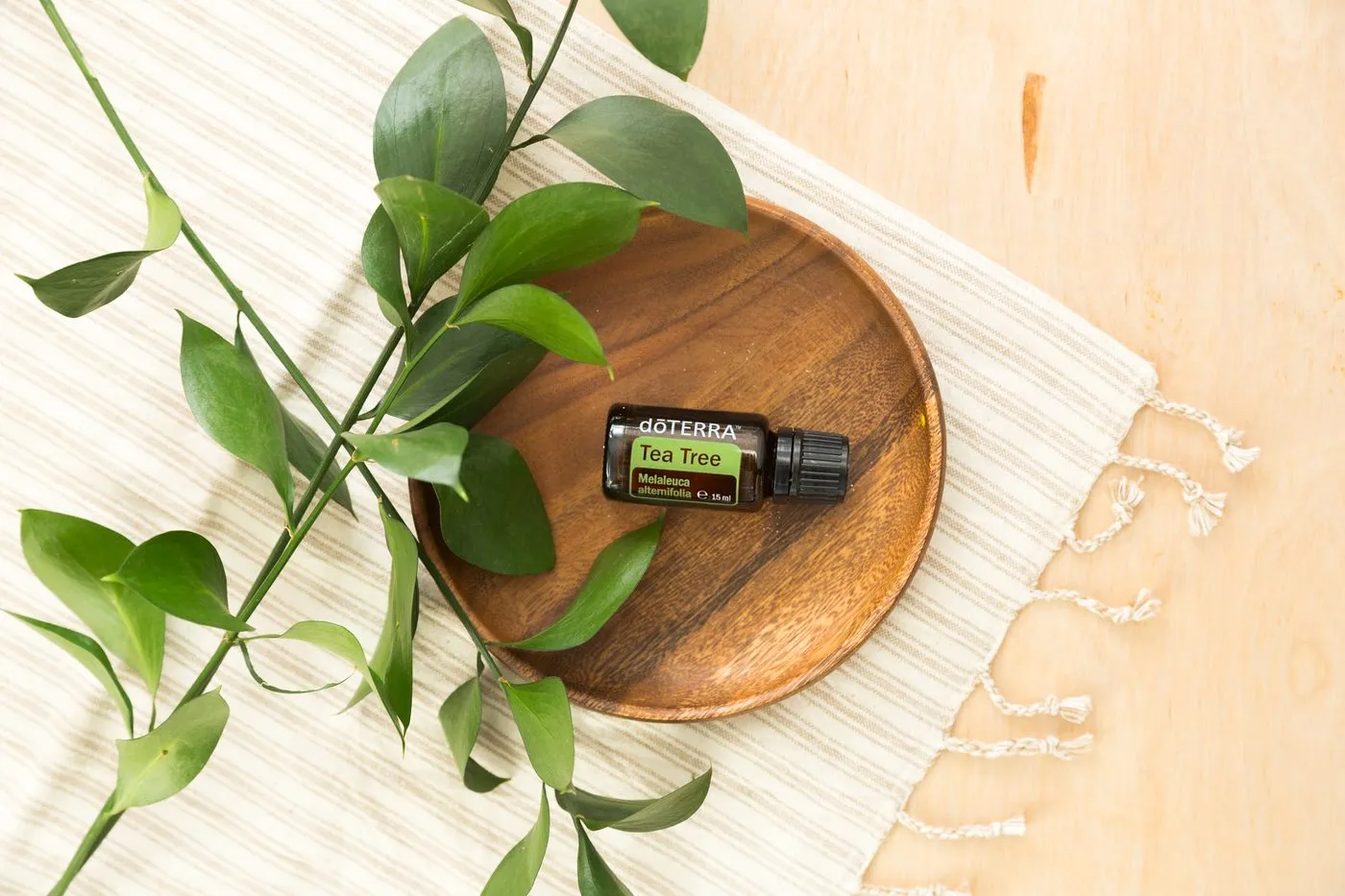
Cats and dogs react to oils differently from people. Tea Tree oil is considered toxic to dogs and cats (Pet Poison Helpline). The rules: never put oils on an animal's coat, ventilate the room, let the animal leave, and don't diffuse in a small closed room.
Storage and hygiene
- Keep bottles tightly closed, cool, away from light, flames and children.
- Don't sniff an oil straight from the bottle for long; don't touch your eyes after handling oils.
- Don't pour oils into a bath without dispersing them in a carrier first — oil floats and reaches the skin at full strength.
- Don't leave a diffuser running all night.
Sensitive, atopic and damaged skin
With atopic skin, rosacea, eczema, sunburn or broken skin, don't experiment with oils yourself. Ask a dermatologist. In such cases the scent alone in a diffuser, in a small amount, is safer.
Face, eyes, ears, intimate areas
- Avoid applying oils near the eyes, inside the ears or on mucous membranes.
- On the face use the lowest concentration (about 0.5–1%) or skip oils altogether.
- Wash your hands after handling an oil before touching your eyes or contact lenses.
Diffuser: how much, how long, how often
Typically 3–5 drops for 30–60 minutes, then a break at least as long as the run. Ventilate the room. Don't place a diffuser near a baby's cot or within reach of children and pets. If you get a headache, nausea, cough or throat irritation, switch it off and air the room. People with asthma and allergies should ask their doctor before they start diffusing.
How to read a label
A good label gives the botanical name, the plant part, the country of origin or a batch number, and warnings. No warnings, or promises of cure, is a red flag. The label in your country matters more than general internet advice — including advice from this site.
Myths worth dropping
- “Natural = safe.” Poisonous plants are natural too.
- “More drops are better.” More often it means more risk rather than more benefit.
- “Water dilutes the oil.” Oil doesn't mix with water — it is diluted in fat (a carrier).
- “If it smells pleasant, it's safe for everyone.” Animals and children react differently from adults.
Common mistakes
- Applying undiluted oil “because it's natural”.
- Adding oil to a glass of water.
- Skipping the patch test.
- Trying several new oils at once — you can't tell what caused a reaction.
- Using oils instead of seeing a doctor.
What to do after an unpleasant reaction
If an oil gets on the skin, wipe it off with vegetable oil, then gently wash with soap and water. If it gets in the eye, rinse with plenty of water and contact a doctor. If an oil is swallowed or there is difficulty breathing, call your local emergency number (112 in the EU) or a poison information centre in your country.