
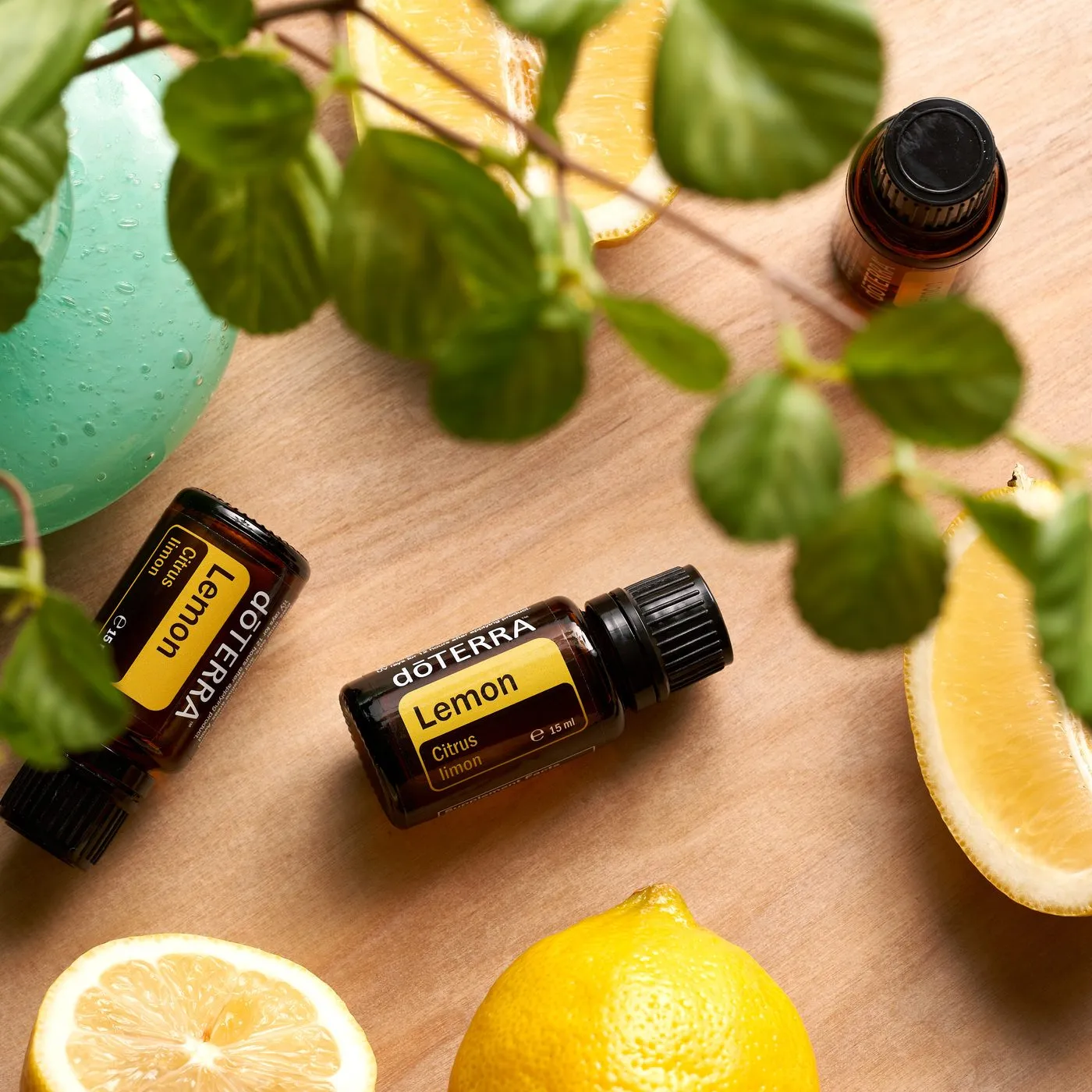
Quick facts
| Feature | Information |
|---|---|
| Botanical name | Citrus limon |
| Plant part / method | fruit peel, cold pressing |
| Scent | fresh, citrusy, “clean” |
| Main constituent | limonene |
| Most common uses | daytime diffuser, household cleaning, freshening rooms |
| Watch out for | phototoxicity, some plastics, pets, never take by mouth |
What people use it for
Lemon is the scent of cleanliness and a fresh start to the day. It is used in a diffuser (alone or with Peppermint), in homemade cleaning products and to freshen the air. Many people also add it to a homemade spray for wiping counters.
How to use it
- Aromatically: 3–5 drops in a diffuser.
- Around the home: a few drops in a bottle of water and vinegar to wipe surfaces; test on a hidden spot first.
- On the skin: usually not recommended — and if you do, only at a low dilution and not before sun exposure.
- By mouth: don't. The Tisserand Institute advises against taking essential oils by mouth unless a qualified practitioner recommends it, and against putting them in water.
Precautions
- Phototoxicity: cold-pressed citrus oils can cause burn-like reactions and discolouration on skin exposed to UV light. NAHA advises staying out of the sun or tanning booths for at least 24 hours after a treatment with such oils (NAHA).
- Citrus oils can damage some plastics and varnishes — use glass and ceramics.
- If you are pregnant or breastfeeding, take medication or have allergies, ask your doctor.
- Cats and dogs can be sensitive to oils — ventilate the room.
Pairs well with
Peppermint, Wild Orange, Lavender and Tea Tree.