
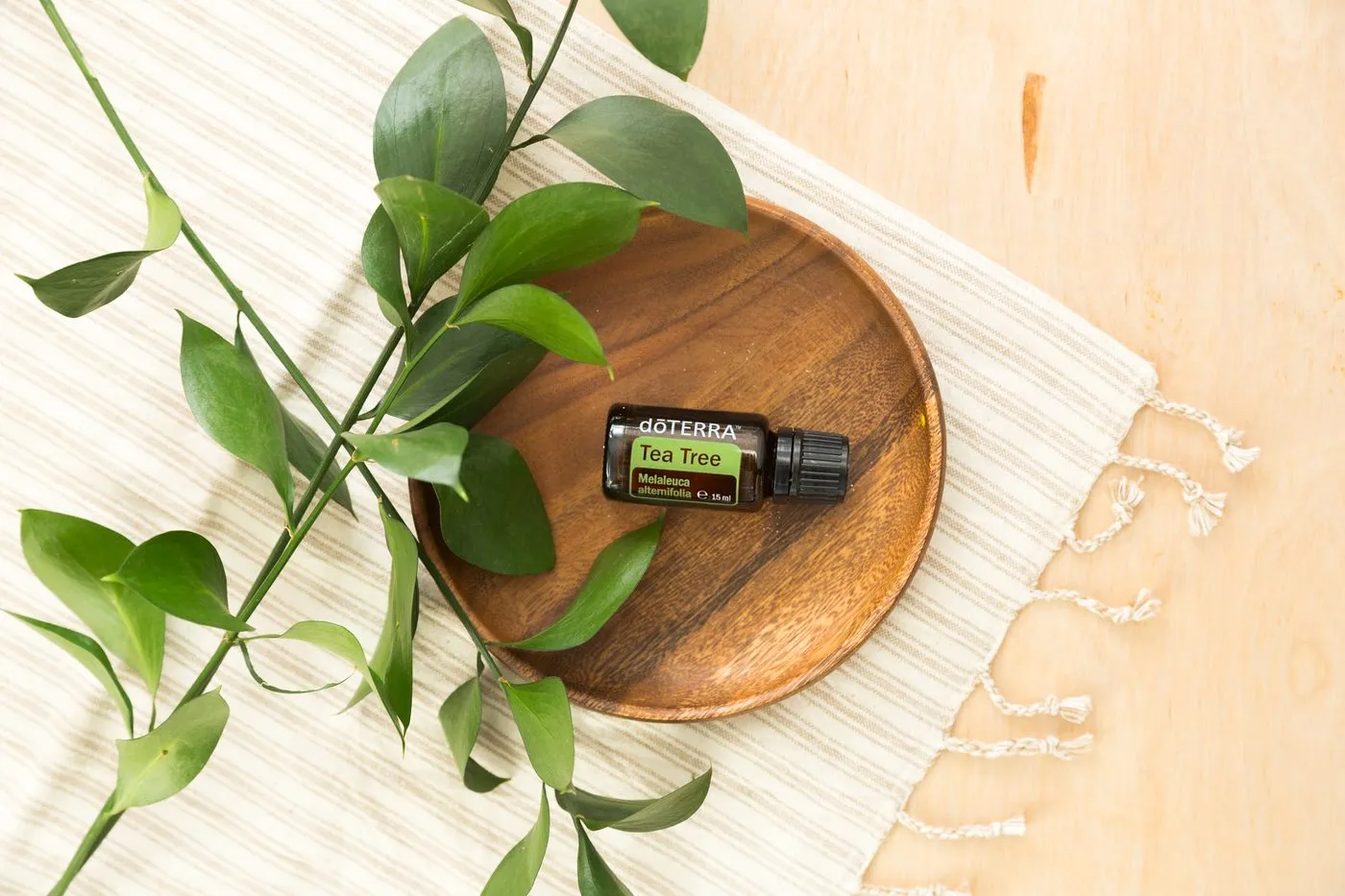
Quick facts
| Feature | Information |
|---|---|
| Botanical name | Melaleuca alternifolia |
| Plant part / method | leaves, steam distillation |
| Scent | fresh, herbal, slightly camphorous |
| Main constituent | terpinen-4-ol |
| Most common uses | household cleaning, diffuser in cold season, diluted on the skin |
| Watch out for | pets, contact allergy, oxidation, never take by mouth |
What people use it for
Tea Tree is a “home” oil: a few drops in a homemade cleaning spray, in a diffuser on autumn days, or diluted in a daily skincare routine. The scent is distinctive, so it is often blended with citrus or lavender.
How to use it
- Aromatically: 2–4 drops in a diffuser, in a well-ventilated room.
- On the skin: only diluted, usually around 1–2% (1–2 drops per 5 ml of carrier oil); patch-test first. Avoid the eyes and ears.
- Around the home: a few drops in a bottle of water and vinegar to wipe surfaces (test on a hidden spot first).
- By mouth: don't.
Precautions
- Pets: Tea Tree is considered toxic to cats and dogs. Don't apply it to animals and don't diffuse it where they can't leave the room. See Pet Poison Helpline.
- Oxidised oil (old, long open, kept warm) is more likely to cause contact allergy — close the bottle and store it cool.
- If you are pregnant or breastfeeding, have a skin condition, take medication or have allergies, ask your doctor.
- Children: only very low dilutions after advice — see essential oils and children.
Pairs well with
Lemon, Lavender and Wild Orange; in home sprays also with the On Guard blend.